01
Loitering munitions
Shahed-type UAVs. Cheap enough to send in waves, with published plans for 500 sorties per day.

Long-range electronic warfare
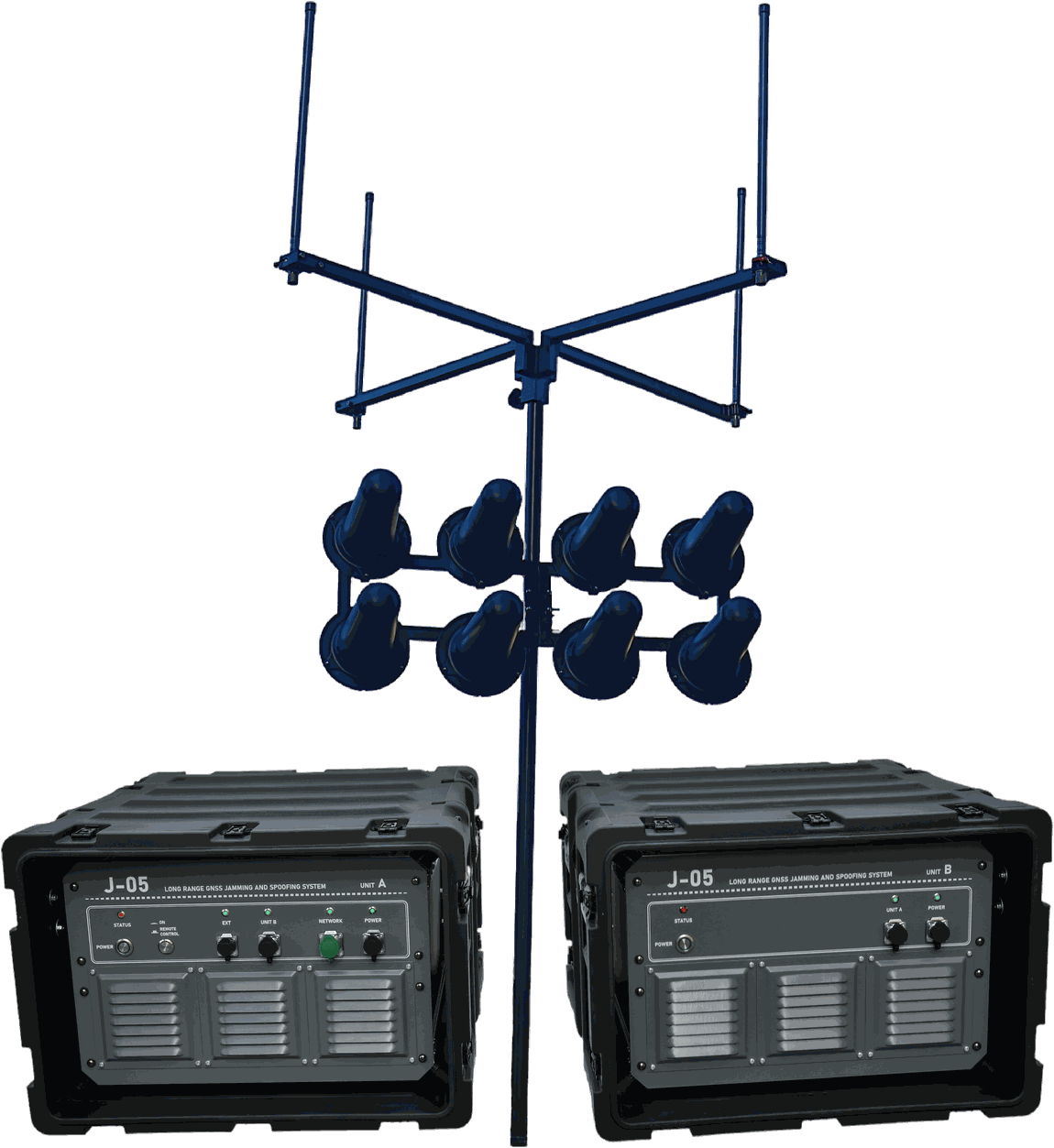
J-05 is a fifth-generation long-range GNSS jamming and spoofing system. It denies the satellite navigation that drones, glide bombs and missiles rely on to reach their targets - across whole regions, not single sites.
The threat
A new class of standoff weapon is defined by low cost and mass. Loitering munitions at $10,000 to $20,000 apiece, with over 1,000 km of range, launched from ordinary trucks. Old bombs fitted with guidance kits, striking from 100 km. Guided missiles and rocket artillery reaching 200 to 300 km.
Shahed-type UAVs. Cheap enough to send in waves, with published plans for 500 sorties per day.
500 to 3,000 kg bombs fitted with folding-wing guidance kits. Fast, small and hard to intercept.
Long-range precision strike from behind the border, guided all the way by satellite.
The case for layered defence
A mass GNSS-guided raid cannot be met by any one tool. Modern defence layers effectors, and the widest layer has to be the cheapest to run.
Scroll the diagram sideways to see all layers.
Illustrative attrition of a 100-drone GNSS-guided raid. Layers shown per protected asset; J-05 deploys as a network.
The system
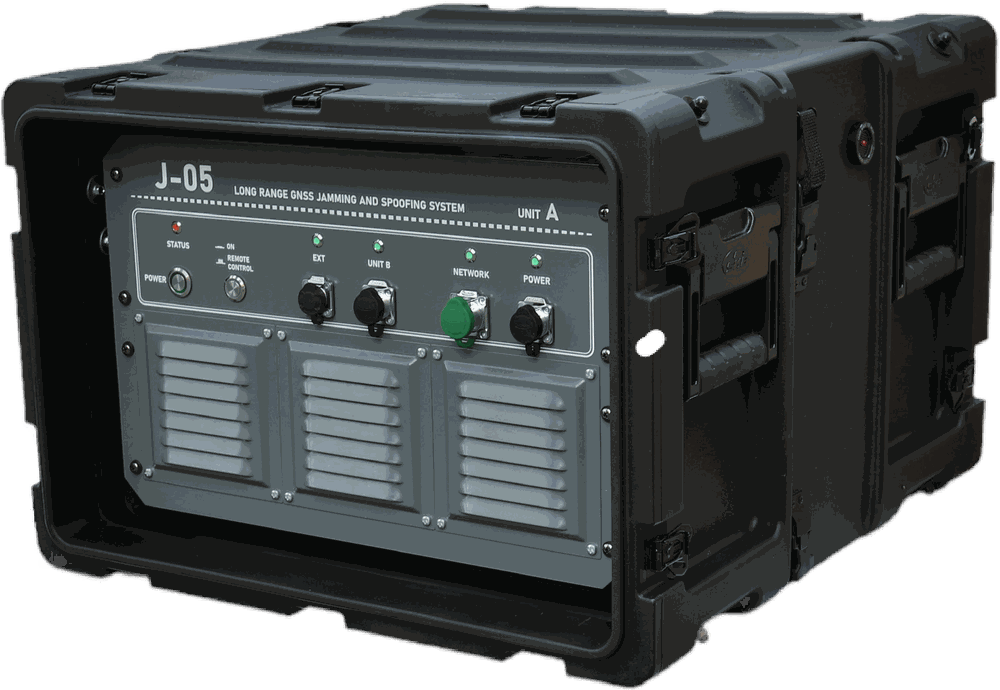
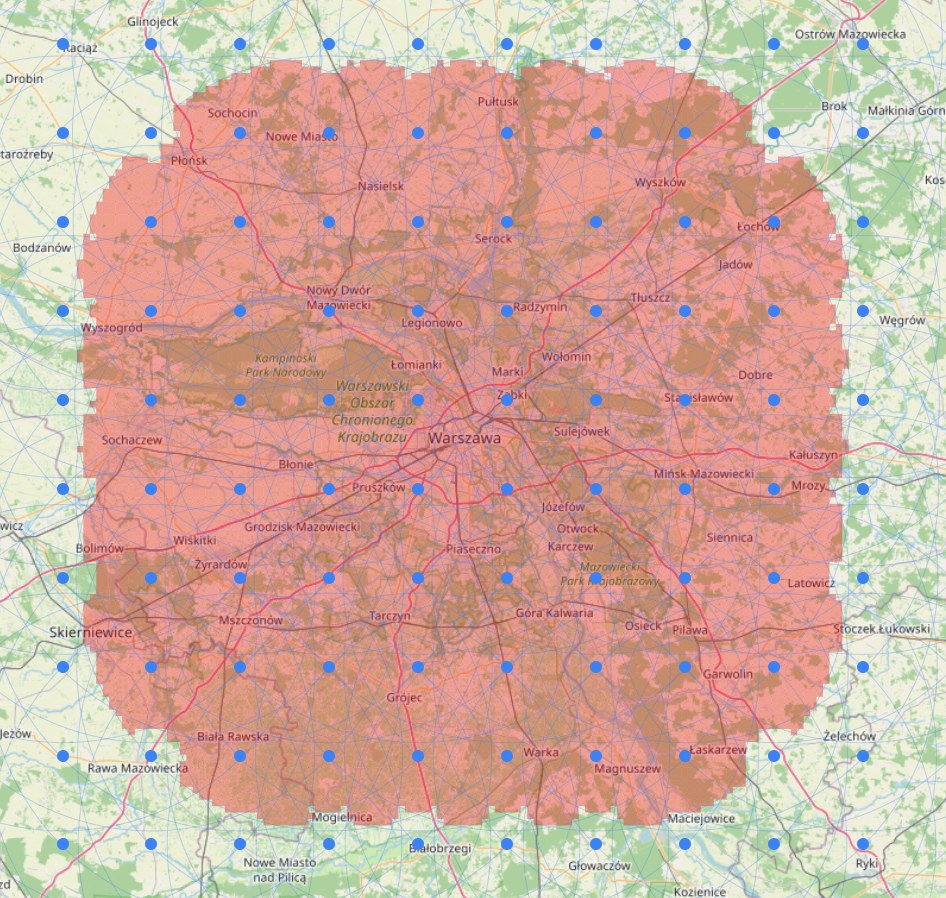
Modelled coverage: approximately 100 J-05 units around Warsaw. Blue markers are jammer sites; the shaded area is where a 16-channel anti-jam receiver loses its fix.
Coverage
Because each unit reaches far, sites sit roughly 14 km apart with fully overlapping fields. There is no corridor for a drone to slip through.
Operational record
The effect is not theoretical. It was demonstrated in a high-intensity drone war, and the lesson learned there is the reason J-05 exists. The engineering goes back more than a decade, now in its fifth generation.
ADX's third-generation jammer, J-03, was deployed during the 2020 Nagorno-Karabakh war.
Credited with bringing down an advanced loitering munition. Airframe recovered and confirmed by Armenia's Ministry of Defence.
GNSS-guided artillery correction disrupted across repeated engagements.
Technical briefings, coverage modelling for your geography, and partnership options including technology transfer and local assembly.